Myth
“Always be closing.”
The truth
By the time you reach the close, the deal has already been decided. It happened weeks earlier, in a pause you didn’t notice.
Coming soon
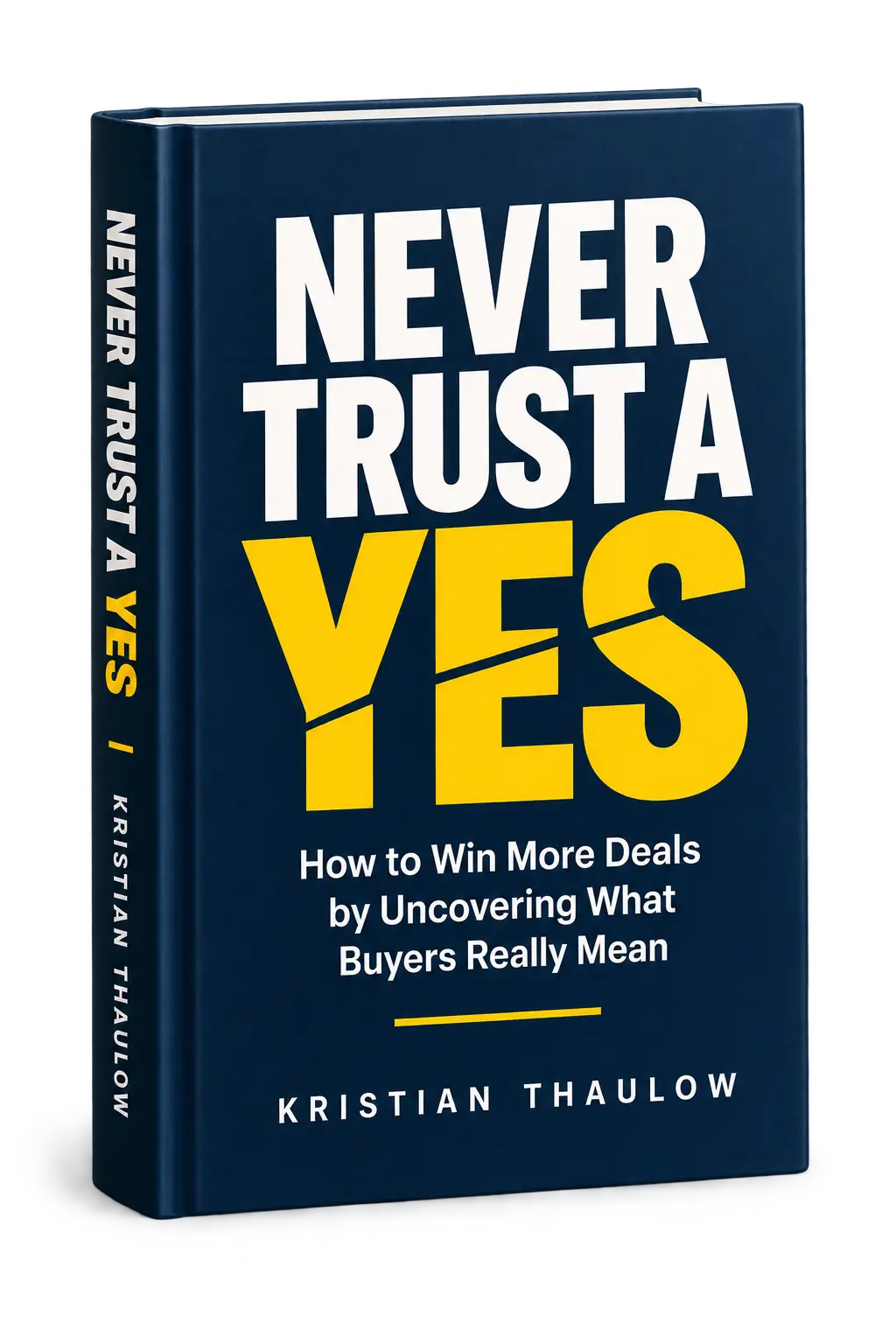
How to Win More Deals by Uncovering What Buyers Really Mean
The deal was decided weeks ago, in a pause you didn’t notice.
Sound familiar?
The client said it with a smile. A colleague nodded in the next window. Legal had signed off without a single change. I moved the deal to 90% before the call transcript finished uploading.
Three weeks later, the deal was dead. No angry email. Just silence, then a polite no.
If that has happened to you, here’s the part that stings. It wasn’t the price, and it wasn’t the process. The answer was in a pause, and I was too busy calculating my commission to hear it.
Why do some deals die even though your client says yes? Sometimes a yes is nothing more than a polite way to end the conversation. This book shows you how to read the client in the moment and stress-test their true intent, without being pushy.
Before the method
Myth
“Always be closing.”
The truth
By the time you reach the close, the deal has already been decided. It happened weeks earlier, in a pause you didn’t notice.
Myth
“A yes means the deal is moving.”
The truth
A yes is an opinion. What the client does next is evidence. Most yeses cost the client nothing, which is why you can’t trust them.
Myth
“If every CRM field is checked, the deal is real.”
The truth
The deal that taught me this passed every stage of the process. It still died. A stage tells you where the deal is on paper, not where the client is.
Myth
“We lost on price.”
The truth
Most reps blame price. In my most expensive loss, price wasn’t the reason. The reason was a worry the client never said out loud.
Myth
“Your best rep has a gut feeling. You can’t teach it.”
The truth
It’s a pattern library built over years. Patterns can be named, and once they’re named, they can be taught across your whole team.
Myth
“A better script or framework will fix it.”
The truth
Instinct Selling gives you the skill to know when to use a framework and, even more valuable, when to ignore it.
The method
Instinct Selling is the trained ability to read the gap between what a client says and what they don’t, in the moment it happens. Not from a process stage but based on what the client does next.
A yes is an opinion. What the client does next is evidence.
Inside the book
By the end, you’ll be able to
Part 1 · The Player
How to spot a fake yes before it ruins your forecast
How to Move Your Reps From Blindly Following Frameworks to Reading the Client
How to Help Your Reps Through a Slump
How to Stop Neediness From Costing You Deals
Part 2 · The Board
How to Get the Real Reason a Deal Died
How to Measure True Urgency and Trust Before You Pitch
How to Test Commitment Before You Spend Hours Writing a Proposal
Part 3 · The Moves
How to Catch Unspoken Hesitation and Handle the Real Objection
How to Turn Your Champion Into an Internal Sales Rep Who Can Convince the CFO
How to Present a Proposal They’re Ready to Approve
How to Stop Clients From Ghosting You and Revive Stalled Deals
How to Protect Your Profits and Stop Giving Away Discounts to Win Deals
Part 4 · The Endgame
How to Hire Sales Reps Who Accurately Forecast Their Deals
How to Build a Sales Team That Closes Big Deals Without You
How to Spot the Root Cause of a Rep’s Underperformance and Get Them Back on Track
Built over twenty years. Tested on the front line.
Average win rate in under a year, with five reps and no extra lead volume.
Revenue brought in.
Increase in profitability over 3 years.
Years in sales, from a furniture shop floor to Head of Sales.
“Kristian took a half-structured sales approach we had to a highly structured sales approach. Result? One of the best years in the company’s history over 15+ years.” His CEO at the time
Who it’s for
You run a B2B team. The ability to read a deal is trapped in one superstar who can only say “gut feeling.” This is how you name it, teach it and scale it.
You carry a quota. Learn which buying signals are real and which are a no disguised as a polite yes, then close more of the pipeline you already have.
For teams
The ability to read a deal shouldn’t live in one superstar. Workshops, talks and team coaching built on the book.

The author
In sales since he was fourteen, starting on the floor of a furniture store. Over twenty years he has sold everything from electronics and language programs to software, coached executives for seven years and led sales teams as Head of Sales. He is the creator of Instinct Selling and lives in Copenhagen, Denmark.
Questions
Two readers. Sales leaders (Sales Managers, Heads of Sales, VPs) who run a B2B team and want an executable playbook, and sales reps who carry a quota and want to read the deal in front of them. It’s written for people selling SaaS, consulting and services.
No. It gives you the skill to know when you need a framework and, more valuable, when to ignore it. It sits at the center of everything else in the book.
Yes. If you have a playbook already, this complements it and gets more performance out of your reps. If you don’t have one, start here.
You can skip ahead to a specific technique. The tactics in Part 3 only work once you can make the read from Part 2, so read those two in order.
A customer relationship is transactional. A client relationship is long-term and protective. A client is under your protection, and you put their interests first, even if that means recommending a smaller solution or pointing them to a competitor.
Yes. Names and identifying details are changed to protect privacy, and a few minor characters are composites.
Join the waitlist and be the first to know when the book is out.